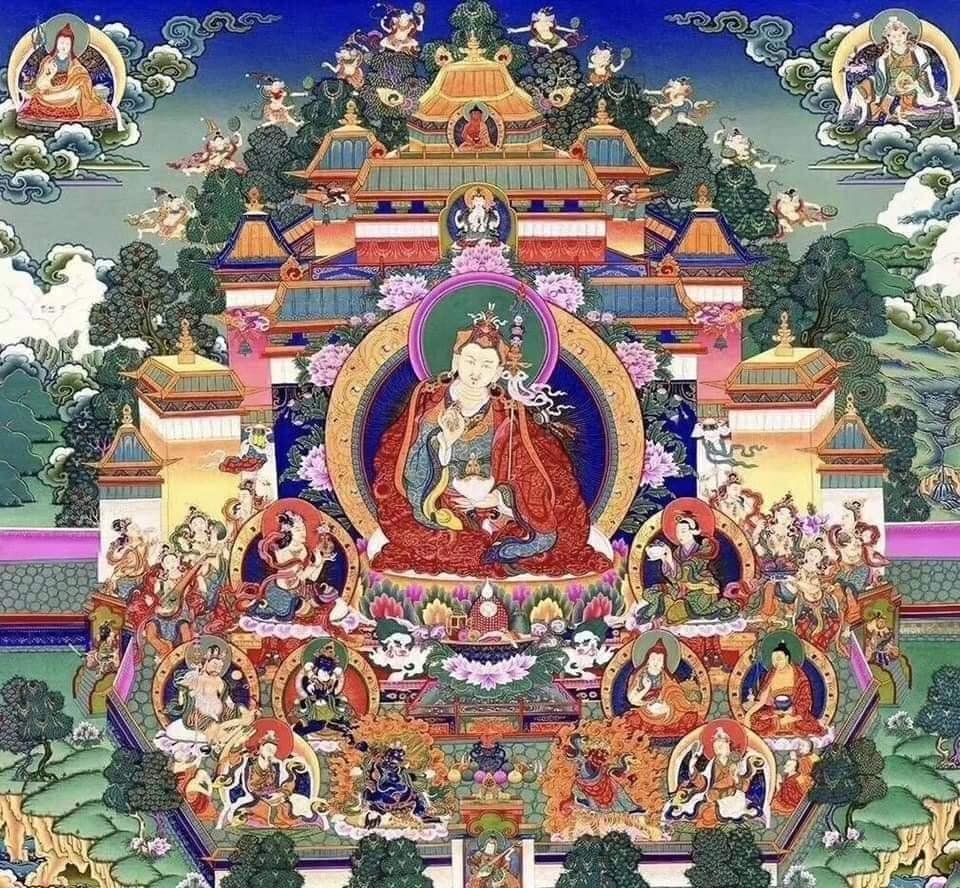
Overview of the Nyingma Tradition
Nyingma (meaning “ancient”) is the oldest of the four major schools of Tibetan Buddhism, tracing its origins back to the 8th century. It was founded on the teachings brought to Tibet by Padmasambhava (Guru Rinpoche), Shantarakshita, and Yeshe Tsogyal, who established Buddhism firmly in Tibet.
The Nyingma tradition is especially known for preserving ancient Vajrayana teachings, including the Dzogchen (Great Perfection) teachings, which focus on recognizing the natural, primordial state of mind.
History and Origins
- Introduction of Buddhism to Tibet:
- In the 8th century, King Trisong Detsen invited Indian masters Padmasambhava and Shantarakshita to Tibet to establish Buddhism.
- Padmasambhava, a tantric master from India, is credited with subduing local spirits and obstacles, thereby allowing Buddhism to flourish in Tibet.
- Terma Tradition (Hidden Treasures):
- The Nyingma lineage uniquely emphasizes terma, teachings and sacred texts hidden by Padmasambhava or other masters to be revealed at a future time by tertöns (treasure revealers).
- These terma include texts, rituals, and meditation instructions suited for future generations.
- Lineage Transmission:
- Nyingma teachings are passed from master to student through oral transmissions (lung) and empowerments (wang).
- Unlike other schools, Nyingma does not have a centralized head but is preserved through various lineage families and monasteries, such as Mindrolling, Palyul, and Dudjom.
Core Philosophical Teachings
- Dzogchen (Great Perfection):
- The heart of Nyingma practice, Dzogchen teaches the recognition of rigpa, the innate, luminous awareness of the mind.
- The goal is to directly realize the natural state of mind, beyond conceptual elaboration or effortful practice.
- Nine Yanas (Vehicles):
- The Nyingma school classifies spiritual paths into Nine Yanas, or vehicles, progressing from basic teachings (like Sutra) to the highest tantric practices (Dzogchen).
- These provide a structured approach suitable for practitioners of varying capacities.
- Integration of Tantra and Meditation:
- Nyingma emphasizes both sutric and tantric practices, including deity yoga, mantra recitation, and meditations on the five Buddha families.
- The combination of ritual, meditation, and philosophical understanding aims to purify obscurations and realize enlightenment.
Practices in the Nyingma Tradition
- Ngondro (Preliminary Practices): Foundational exercises including prostrations, refuge, Vajrasattva purification, mandala offerings, and guru yoga.
- Deity Yoga: Meditation on enlightened forms to cultivate compassion and wisdom.
- Dzogchen Meditation: Directly recognizing the natural, non-dual awareness of the mind.
- Ritual and Prayer: Includes pujas, prayer flags, and protective rituals.
- Terma Practice: Working with revealed teachings specific to a practitioner’s lineage.
Distinguishing Features of Nyingma
- Ancient Origins: Oldest school in Tibet.
- Terma System: Unique emphasis on hidden teachings revealed by tertöns.
- Dzogchen Emphasis: Direct path to recognize the natural state of mind.
- Decentralized Leadership: Preserved by multiple masters and monasteries rather than a single head.
- Integration of Ritual and Meditation: Combines scholarly, meditative, and tantric approaches.
The Story of Guru Rinpoche (Padmasambhava)
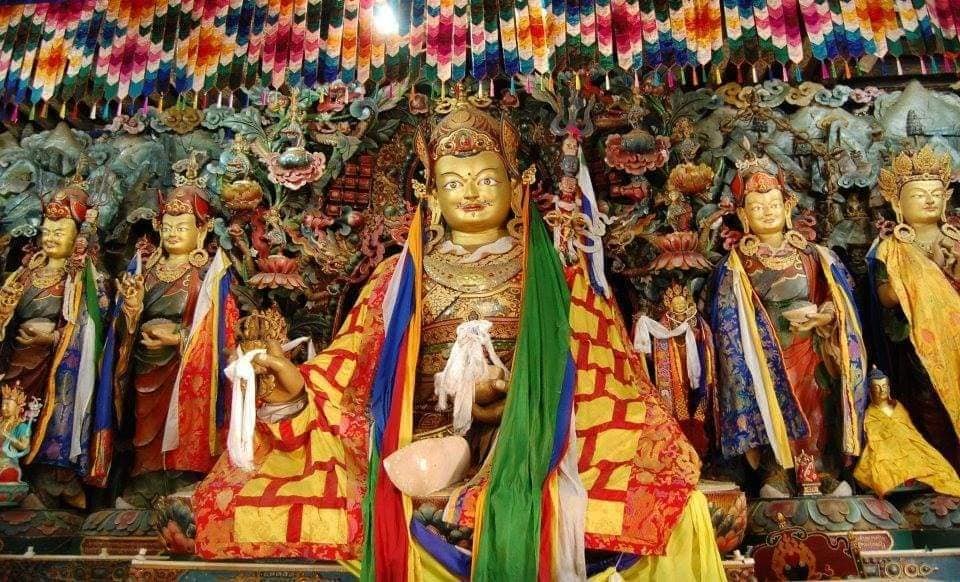
Miraculous Birth
Guru Rinpoche was born in Oddiyana, a kingdom in the Himalayan region (modern-day Pakistan or Afghanistan), in the 8th century. Legend says he did not come into the world like ordinary humans; instead, he emerged fully grown from a lotus flower floating on a lake. Hence his name, Padmasambhava – “Lotus-Born.”
From birth, he displayed extraordinary signs of enlightenment and supernatural abilities. As a child, he mastered the Buddhist teachings, tantric practices, and profound meditation techniques in a very short time, demonstrating wisdom beyond ordinary comprehension.
Journey to Tibet
At that time, Tibet was ruled by King Trisong Detsen, who wanted to establish Buddhism in the country. However, the local spirits, demons, and deities resisted this new religion. Monks and scholars were unable to subdue these forces, and the construction of Samye Monastery, Tibet’s first monastery, was constantly disrupted by supernatural obstacles.
Guru Rinpoche was invited to Tibet to help. Upon arrival, he displayed his miraculous powers: he subdued the local spirits, transforming them into protectors of the Dharma. He tamed fierce demons not by violence, but through compassion, wisdom, and tantric practices, turning Tibet’s spiritual obstacles into allies.
Founding of Vajrayana in Tibet
Guru Rinpoche taught the complete Vajrayana path, including:
- Guru Yoga – devotion to one’s spiritual teacher
- Deity Yoga – meditation on enlightened forms
- Dzogchen (Great Perfection) – recognizing the mind’s natural, luminous state
He also concealed sacred teachings known as terma (hidden treasures) for future generations. These treasures were to be discovered by tertöns (treasure revealers) at the right time to benefit sentient beings. This unique system ensured that his teachings would remain alive and adaptable across time.
The Eight Manifestations of Guru Rinpoche
Padmasambhava is said to have manifested in eight different forms, each representing a different aspect of enlightened activity. These manifestations are depicted in art and practice, emphasizing that he works for the benefit of all beings in multiple ways.
Later Life and Legacy
After completing his work in Tibet, Guru Rinpoche traveled extensively, meditating in remote caves and teaching disciples across the Himalayas. He is said to have attained full enlightenment and promised to remain accessible to all beings in visionary forms whenever they call upon him.
Even today, practitioners invoke Guru Rinpoche in prayers and meditation, particularly in the Nyingma school, which considers him the founder and eternal protector of their lineage. His teachings guide both monks and laypeople on the path to liberation, emphasizing wisdom, compassion, and direct realization.
Symbolism and Teachings
- Lotus birth: Purity and spiritual origin beyond ordinary constraints.
- Subduing spirits: Transforming obstacles into support, a metaphor for taming one’s own mind.
- Terma system: Ensures that spiritual knowledge is timeless and accessible when needed.
- Eight manifestations: Demonstrates the multifaceted ways enlightenment works for beings.
Conclusion
Guru Rinpoche is more than a historical figure; he embodies the power of wisdom, compassion, and miraculous skill to benefit all beings. His story inspires practitioners to cultivate courage, devotion, and awareness in the face of both inner and outer challenges.